A Practical Guide to Street Sweets in Mexico City
There's no better place than CDMX to satisfy your sweet tooth with a whole world full of desserts on the streets

This guide is provided for free, but tips are appreciated (PayPal or Venmo) and help support future food research and writing. I share ongoing food discoveries and updates on TikTok, and publish longer guides like this on Substack.
Mexico City is known worldwide for its incredible street food culture, which I’ve documented in my CDMX Street Food Guide. Eating on the streets here goes well beyond just the savory. Sweet treats are just as much a part of the rhythm of daily life all over the city. Some are made fresh and served warm, others are frozen to beat the afternoon heat, and many are prepared ahead of time and displayed in colorful trays or containers. Together they form a street dessert culture that’s just as varied as the city’s savory foods.
This guide focuses on the sweets you’re most likely to encounter while exploring Mexico City. Rather than cataloging every possible dessert, it highlights the treats that appear most consistently across neighborhoods and street markets, giving you a practical reference for what you’ll see and how to try it.
Warm & Comforting Treats
These sweets are designed to be eaten warm and are some of the most comforting foods for Mexicans. Many are prepared to order and customized with fillings or toppings, making them some of the most satisfying and textural street sweets you’ll encounter.
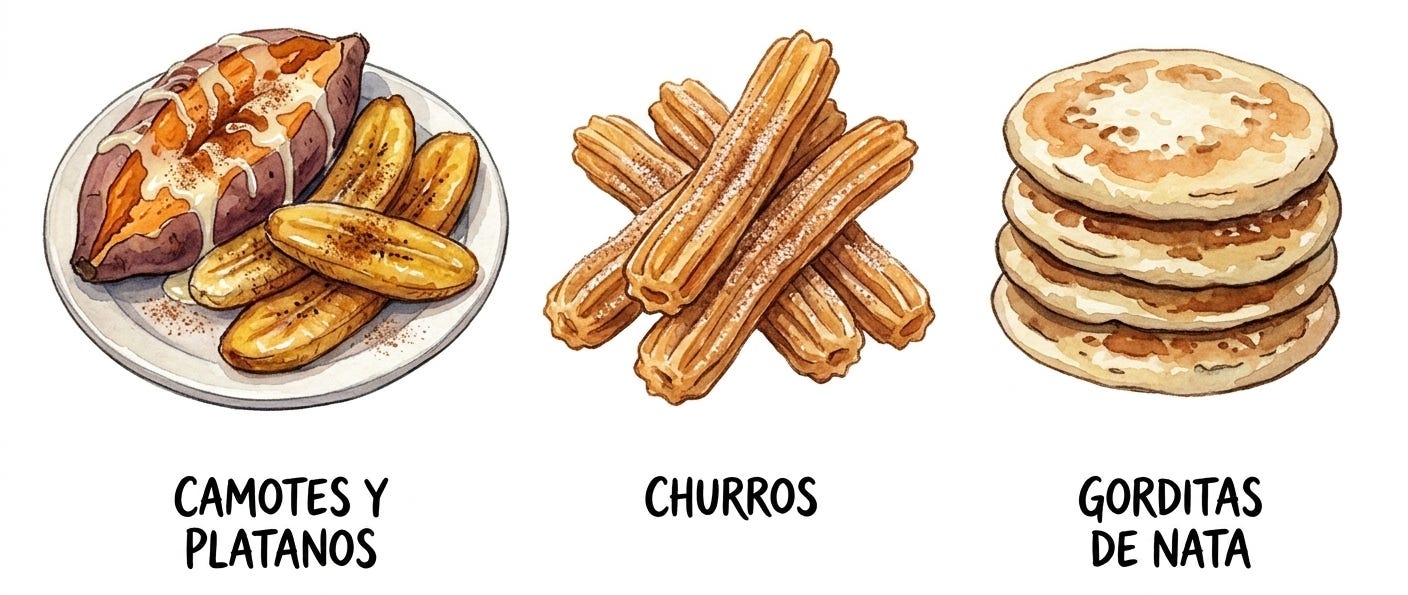
Camotes & Plátanos
Camotes (sweet potatoes) and plátanos (bananas) are steamed inside metal carts that roam Mexico City’s streets at night, announced by a high-pitched steam whistle. The vendor slices the camote or plátano and finishes it with toppings, most commonly lechera (sweetened condensed milk) and canela (cinnamon). Other options may include cajeta (goat’s milk caramel), chispas de chocolate (chocolate sprinkles), chocolate sauce, or jam. Both are served hot and eaten as late-night snacks
Churros
Churros are long, ridged sticks of fried dough coated in cinnamon sugar. They’re commonly sold from street stands as well as roaming vendors, especially in busy pedestrian areas. Many vendors offer churros rellenos (filled churros), piped to order with fillings like cajeta (goat’s milk caramel), lechera (condensed milk), or chocolate. They’re best eaten fresh and warm, often alongside hot chocolate.
Gorditas de Nata
Gorditas de nata are small, thick griddle cakes made from a dough enriched with nata (cream). They’re cooked fresh on a flat griddle until lightly crisp on the outside and soft inside. Mildly sweet on their own, they’re typically filled with options like cajeta (goat’s milk caramel), lechera (condensed milk), mermelada (jam), arroz con leche (rice pudding), or Nutella.
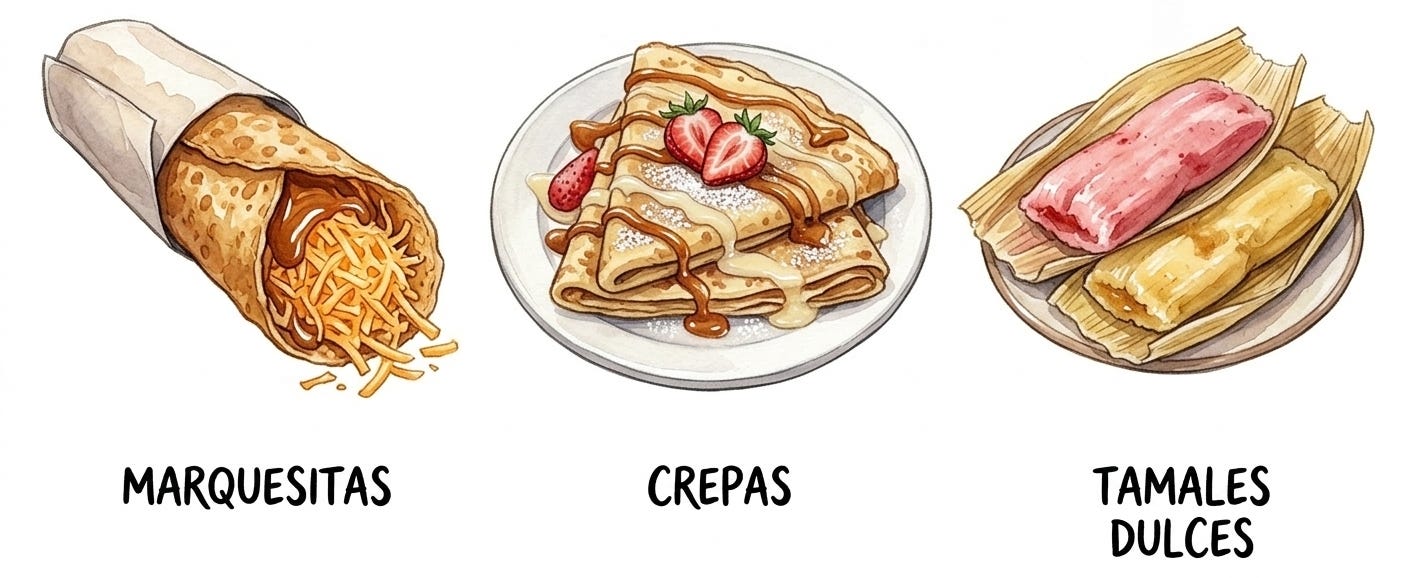
Marquesitas
Marquesitas are an import from Yucatán, but are becoming increasingly popular in CDMX. They’re thin, crepe-like wafers cooked until crispy, then rolled into a cylinder and filled while still hot. The classic filling is queso de bola (a salty Dutch cheese), often paired with sweet fillings. Nutella is especially popular, alongside options like cajeta (goat’s milk caramel), lechera (condensed milk), and fresh fruit.
Crepas
Crepas (crepes) are similar to the ones you’d find in France, but feature their own Mexican twist. They tend to be made larger to hold more filling, and cooked a bit crispier than traditional ones, though not to the level of a marquesita. Sweet versions are most common on the street, filled with options like cajeta (goat’s milk caramel), queso Philadelphia (cream cheese), Nutella, and fresh fruit. They’re made to order and served hot, and many stands also offer savory variations.
Tamales Dulces
Tamales dulces are made from masa mixed with sugar and baked inside corn husks. The most common variation is studded with pasas (raisins) and dyed pink, though other typical flavors include fresa (strawberry), piña (pineapple), and chocolate. They’re sold alongside their savory counterparts, typically late at night, from large metal pots on bicycles roaming the city.
Chilly Confections
On warm afternoons in parks, outside schools, and along busy sidewalks, carts and stands offer quick ways to cool down. Flavors range from familiar to distinctly Mexican. Whether you’re craving something creamy, fruity, or with a hint of spice, this is the category you’ll find yourself returning to most often in the heat.
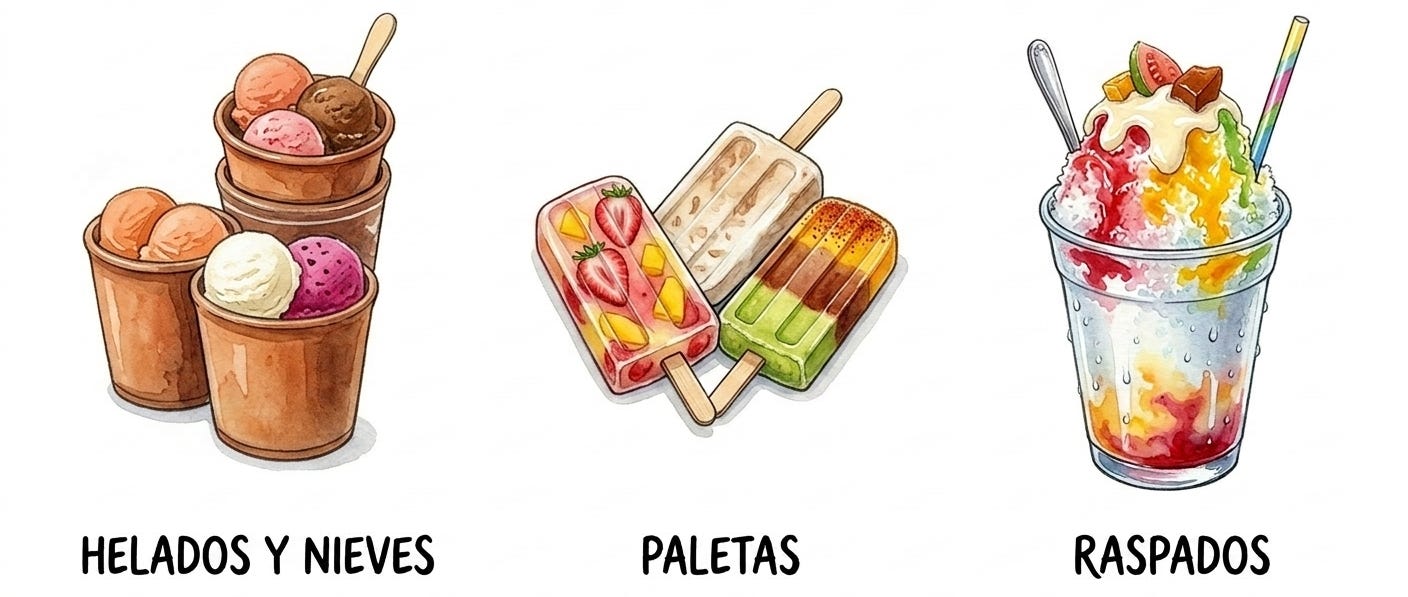
Helados/Nieves
While the terms are sometimes used interchangeably, helado is milk-based ice cream, while nieve is water-based, closer to a sorbet. Flavors range from familiar options like chocolate and vanilla to fruit-forward varieties such as fresa (strawberry), mango, limón (lime), and maracuyá (passionfruit). Other popular flavors include nuez (walnut), queso (cheese), and beso de ángel (typically made with cherries and pecans). Some stands may feature a variety of creative options using artisan ingredients. They’re usually served in cups or cones and may be sold from roaming carts or stands in parks and busy pedestrian areas.
Paletas
Paletas are basically popsicles, but typically made with fresh natural ingredients. Some of the most popular water-based paletas include limón (lime), tamarindo (tamarind), mango, jamaica (hibiscus), fresa (strawberry), piña (pineapple), and sandía (watermelon). Milk-based varieties include creamy favorites like chocolate, coco (coconut), cajeta (goat’s milk caramel), café (coffee), fresas con crema (strawberries & cream), and cookies & cream. Flavor combinations are endless, commonly including the addition of chamoy (spicy fruit paste) or a chocolate coating.
Raspados
Raspados are shaved ice taken to the next level. They’re flavored with syrups, often made from real fruit, and typically finished with a drizzle of lechera (condensed milk). They can also be spiced up with chamoy (spicy fruit sauce), depending on the flavor and your preference. Vendors shave the ice fresh into cups and build each one to order, making them especially popular on hot afternoons
Ready-Made Sweets
Many vendors across Mexico City specialize in desserts that are prepared ahead of time and displayed in trays, baskets, or bins. These stands make it easy to grab something sweet on the go. Because everything is pre-made, this category often offers the widest variety of options in one place.
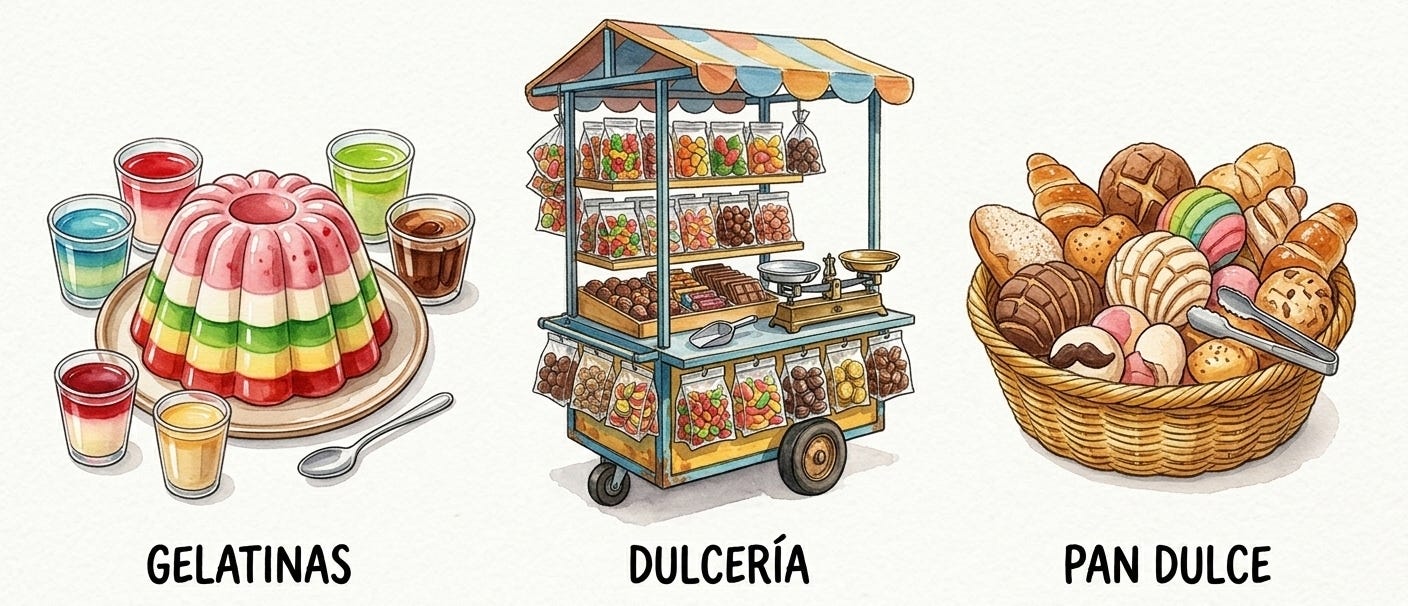
Gelatinas
Gelatinas are molded gelatin desserts that come in a wide range of colors and flavors. They’re commonly sold from small street stands or carts displaying pre-made portions in plastic cups or occasionally intricate molds. Some are simply fruit flavored, while others are layered with fruit pieces or creamy fillings. Their bright colors and playful shapes make them especially popular as an inexpensive sweet treat or afternoon snack.
Dulcerías
Dulcerías are small candy stands selling a variety of sweets by weight. You’ll typically see bins or bags filled with chocolates and gomitas (gummy candies), ranging from sweet varieties to enchilados coated in chili and sugar. Many also carry items like chips, nuts, and candied peanuts, making them a common stop for something sweet or salty to snack on while walking through the city.
Pan Dulce
Pan dulce baskets are a common sight around the city, typical throughout the day but particularly in the morning and late night hours. Vendors carry large baskets filled with assorted sweet breads through neighborhoods or set them up on street corners. These baskets usually contain a rotating mix of classic pastries sourced from local bakeries, typically sold individually at low prices for an easy on-the-go treat
Postres Caseros
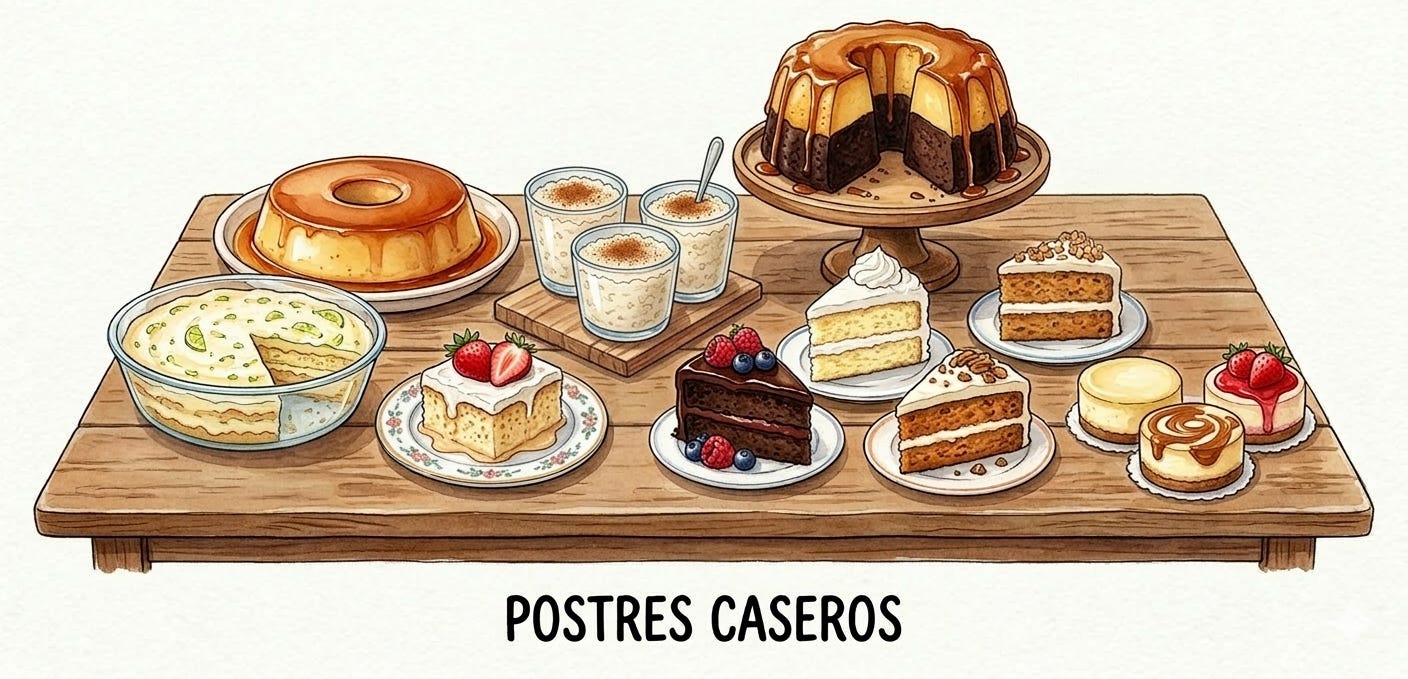
Postres caseros (homemade desserts) are sold from specialty stands displaying trays of pre-made sweets, usually portioned into individual cups or slices. They typically open in the evenings, with some staying open late into the night or early morning hours on weekends. It’s worth keeping an eye out for stands that clearly make their offerings in-house as many simply resell products from wholesale warehouse stores. Selection can vary widely based on specialty, but common options to look for include:
Flan
Flan is a silky baked custard topped with a layer of caramel that forms as sugar melts during cooking. Once chilled and inverted, the caramel becomes a glossy sauce that coats the custard. It’s typically served in small cups or sliced from larger molds.
Arroz con Leche
Arroz con leche is a creamy rice pudding made by slowly cooking rice with milk, sugar, and cinnamon. It’s typically served chilled or at room temperature in small cups and often mixed with pasas (raisins) and finished with a dusting of ground cinnamon on top.
Pastel de Tres Leches
Pastel de tres leches is a light sponge cake soaked in a mixture of three milks, giving it an ultra-moist texture. Topped with whipped cream, it can come in a variety of flavors from fruit to chocolate and more.
Carlota de Limon
Carlota de limón, known to many local simply as pay de limón, is a chilled, no-bake dessert made by layering cookies with a creamy mixture of lime juice and condensed milk. As it rests, the cookies soften and the layers set into a sliceable cake-like dessert.
Pastel Imposible
Pastel imposible is a layered dessert made by baking chocolate cake and flan together in the same mold. During baking, the two layers invert, leaving flan on top and cake on the bottom, hence the “impossible” name. It’s also commonly called flan imposible or chocoflan
Rebanadas de Pastel
Rebanadas de pastel are simply slices of cake sold individually. Flavors vary widely but chocolate, vanilla, and carrot are particularly popular, though you may come across unique creations and international favorites, like tiramisu.
Cheesecake
Cheesecake may not seem especially Mexican, but it is a popular dessert here. Some stands go all out with a variety of flavors made from different fruits, chocolate, cookies, nuts, and other combinations
Traditional Mexican Goodies
Many stands also sell a variety of classic Mexican treats. These sweets are typically pre-made and represent long histories in Mexican confectionery. There are all sorts of variations on these sweets, but they remain nostalgic favorites among Mexicans.
Obleas
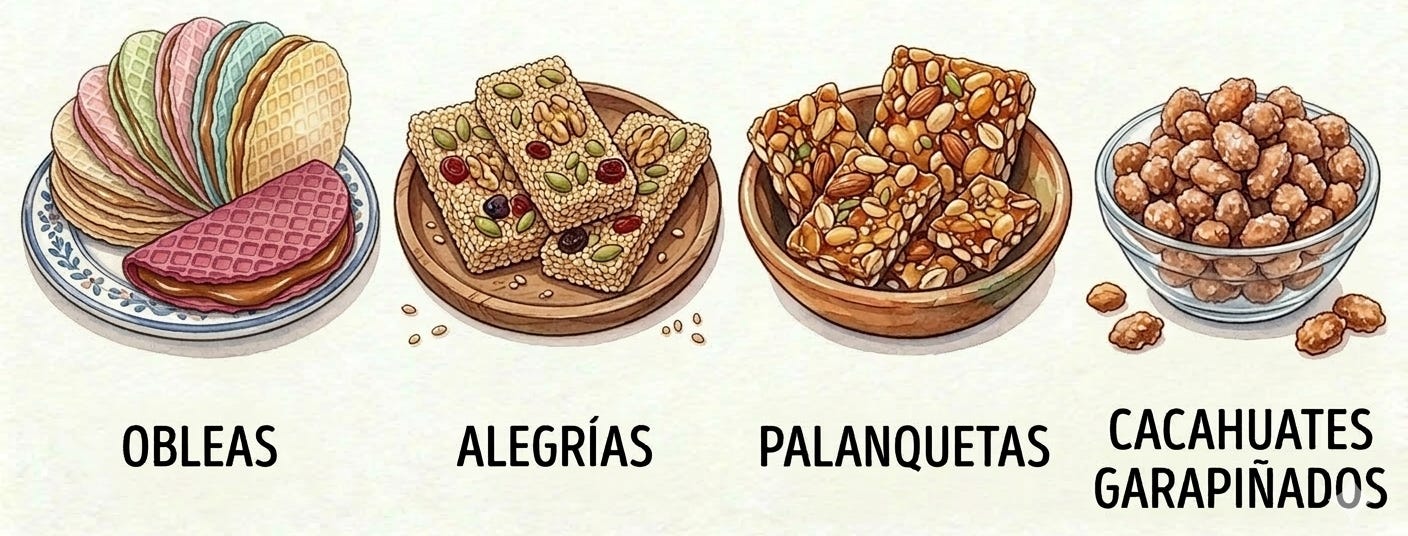
Obleas are thin, crisp wafers often sandwiched together with a layer of cajeta. You may also find them in different flavors, with a variety of colors to match. Some versions also include nuts, seeds, sprinkles, or colorful candy fillings.
Alegrias
Alegrías are sweet bars made from popped amaranth seeds bound together with honey or piloncillo. They’re typically pressed into rectangular blocks and may include additions like peanuts, raisins, or pepitas. It is common to find chocolate versions and increasingly other flavors as well.
Palanquetas
Palanquetas are brittle-style candy bars made by binding nuts or seeds with hardened caramelized sugar. Peanut versions are the most typical, though varieties made with pepitas, sesame seeds, or mixed nuts are also commonly found.
Cacahuates Garapiñados
Cacahuates garapiñados are peanuts coated in a crunchy shell of caramelized sugar. Vendors cook them in large pans until the sugar crystallizes around the nuts, creating a sweet, crackly coating.They can be prepared ahead of time, or occasionally made fresh on the spot
Cocadas
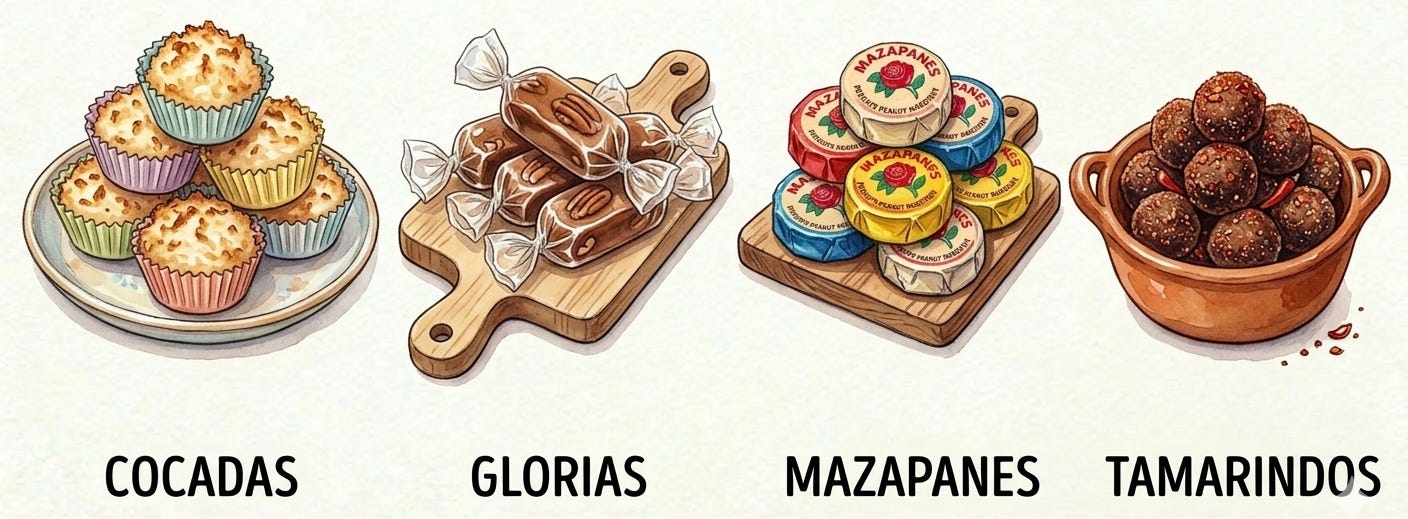
Cocadas are coconut sweets made from shredded coconut mixed with sugar and milk or lechera. They’re baked for a slightly crisp exterior while remaining soft and chewy inside. Usually sold as small mounds or bars, you may find them with different flavors and colorings.
Glorias
Glorias are soft caramel candies made from milk and sugar. They originated in Nuevo León and are usually found in a red wrapper. They have a rich caramel texture, and are traditionally made with pecans.
Mazapanes
Mazapanes are crumbly peanut candies made from finely ground peanuts and sugar pressed into small round disks. Though popular brands are widely available, many puestos sell handmade mazapanes in different flavors, sometimes coated in chocolate. They’re very delicate and tend to break apart easily.
Tamarindos
Tamarindo sweets are made from the pulp of the tamarind fruit, which has a naturally tangy, slightly sour flavor. They’re typically formed into small balls, bars, or spoonable pastes and mixed with sugar, salt, and chile for a balance of sweet, sour, and spicy flavors. They often still include the seed, so be careful when taking a bite!
Merengues
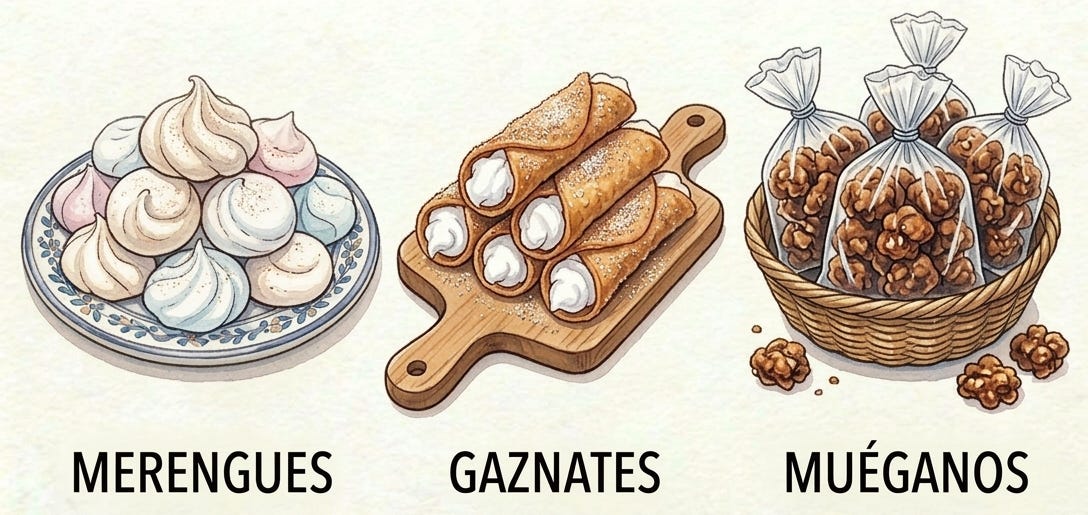
Merengues are airy sweets made from whipped egg whites and sugar. They’re often dyed pink and sometimes flavored with fresa (strawberry). You’ll commonly find them soft in cups or baked into a light, crunchy version.
Gaznates
Gaznates are tube-shaped pastries made from thin, fried dough shells filled with sweet meringue. The shells are crisp while the filling is light and airy, creating a contrast of textures. They are typically sold at the same stands as merengues.
Muéganos
Muéganos are small clusters of fried dough pieces bound together with a piloncillo caramel. They form compact, crunchy bites with a lightly caramelized sweetness and are commonly sold in packaged bundles alongside merengues.
Fruity Favorites
Fruit plays a major role in CDMX street sweets. Mexico’s fresh produce is enhanced by a variety of toppings, whether sweet or spicy. They are endlessly customizable to your preferences, so are the perfect way to enjoy nature’s sweet offerings!
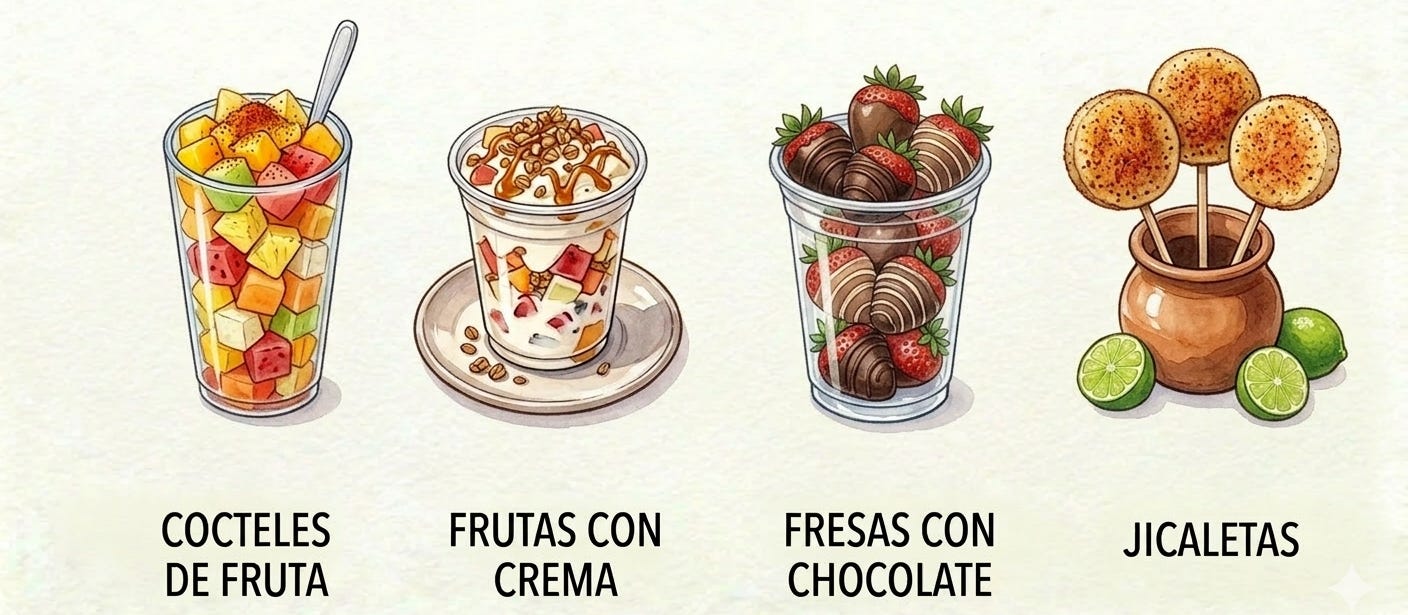
Cocteles de Frutas
Cocteles de fruta are fresh fruit cups assembled by street vendors and typically served in clear plastic cups. They’re filled with a mix of chopped fruit such as mango, papaya, piña (pineapple), sandía (watermelon), melón (cantaloupe), jícama, and whatever else may be in season. Vendors offer toppings like lime juice, chile, chamoy, or other options so you can customize them to your taste.
Frutas con Crema
Frutas con crema are cups of fruit mixed with a sweet, creamy mixture. Vendors typically combine the chopped fruit with a blend of crema and lechera, sometimes adding yogurt or chantilly as well. Fresas (strawberries) are the most common and poplar fruit used, but it is also common to find duraznos (peaches), mango, frutos rojos (berries), or other options as well. Some vendors will offer nuts, sprinkles, and other toppings to go along with it.
Fresas con Chocolate
Fresas con chocolate are strawberries served in a cup then coated in melted chocolate. They are typically allowed to set before serving so the chocolate forms a hard shell over the berries. Toppings like sprinkles, crushed nuts, or a drizzle of white chocolate are offered by some vendors. While other fruits may occasionally appear, strawberries dominate this simple but popular street dessert.
Jicaletas
Jicaletas are large slices of jícama cut into rounds and served on a stick, similar in presentation to a paleta. The crisp, mildly sweet root takes on the flavor of toppings such as chamoy, chile powder, or colorful sugars. The result balances fresh crunch with sweet, sour, salty, and spicy flavors.
Like the rest of Mexico City’s street food culture, the best sweet discoveries often happen by accident. Use this guide as a reference, stay curious, and don’t hesitate to try something unfamiliar when it catches your eye. And if you’re ready to explore the savory side of CDMX too, check out my Practical Guide to Street Food in Mexico City and Practical Guide to Tacos in Mexico City.
Want more like this? I post ongoing food finds and neighborhood eating tips on TikTok, and publish practical guides on Substack covering Mexico City and beyond. Subscribing helps support the work and ensures you don’t miss future guides.
Enjoyed this guide? Tips help support future food research and writing.
Suggested tips (totally optional):
$2 - Buy me some churros
$5 - Buy me a marquesita
$10 - Buy me a whole pastel imposible