Derek Eats Oaxaca
A guide to eating on the streets and in the markets of Oaxaca that define one of Mexico's most celebrated food cultures

This guide is provided for free, but tips are appreciated (PayPal or Venmo) and help support future food research and writing. I share ongoing food discoveries and updates on TikTok, and publish longer guides like this on Substack.
Oaxaca is known around the world for its unique take on Mexican cuisine. The preparation is often more traditional than what you might find in much of Mexico, leaning on pre-Hispanic techniques. The city has drawn a lot of attention thanks to its vibrant street food scene and well-deserved reputation for high-end dining.
This guide is based on my own experience eating through Oaxaca’s streets and markets more so than its restaurants. What you’ll find here is the food I actually ate: the stuff sold out of market stalls, street-side puestos, and wheeled carts in the zócalo.
Common ingredients you’ll find throughout Oaxacan cuisine:
Quesillo - mild, stringy cheese originating in Oaxaca but popular around Mexico
Tasajo - a smoky, cured cut of beef
Chorizo - distinct pork sausage made with vinegar and red chiles
Cecina enchilada - cured pork marinated in guajillo chile paste
Chapulines - dried grasshoppers and toasted with salt, garlic, and lime, added to dishes or eaten simply as a snack
Memelas
The memela, in my opinion, is the unsung hero of Oaxacan cuisine. A tortilla is pressed fresh then cooked on the comal, with the edges pinched slightly to hold the fillings. It is topped with asiento (pork lard) and frijoles, then filled with your protein of choice. You’ll be able to find them with meats like tinga (shredded chicken), chicharrón (pork rinds), tasajo, and chorizo, but my go-to favorites were salpicón for a mixture of beef with fresh veggies and simply quesillo.
Some puestos offer memelas around the clock, particularly those set up around the zócalo on certain days, but they are primarily a breakfast food. If you wait until the afternoon, it’s very possible they’ll have sold out of your desired filling.


Tlayudas
Tlayudas are the primary source of Oaxaca’s recent notoriety, and for good reason. The giant, crispy tortilla is itself called a tlayuda, which is covered in asiento (pork lard), frijoles, a wonderfully excessive load of quesillo, cabbage, and avocado. It’s possible to find all sorts of proteins from pastor to chapulines (grasshoppers), but the most common I saw were tasajo and chorizo. I’d say it’s worth trying both because each was delightful in its own way.
Many restaurants serve up elevated versions of tlayudas, but I think the best ones come in their truest form on the streets. You can get them from different places at all times of day, but ask any local and they’ll assure you tlayudas are very much meant to be a night food. Whatever you do, don’t call it a Mexican pizza.


Empanadas
Order an empanada in Oaxaca and you might end up with something a bit different than what you were expecting. That was definitely my experience! You can find the sweet pastries at bakeries, but true Oaxacan empanadas are large, hand-pressed tortillas that are filled then sealed around the edges while cooking on the comal. The most quintessential is the empanada de amarillo, filled with mole amarillo, chicken, and either hoja santa or cilantro. A variation with mole verde is also widely available, along with flor de calabaza, which mixes squash blossom with quesillo.
They tend to be a lunch meal, but are a bit more flexible in terms of timing. Walk around the markets and you’ll find premade empanadas being sold out of baskets, more commonly in the mornings. They’re not as fresh, of course, but are typically cheaper and have their own appeal.


Tejate
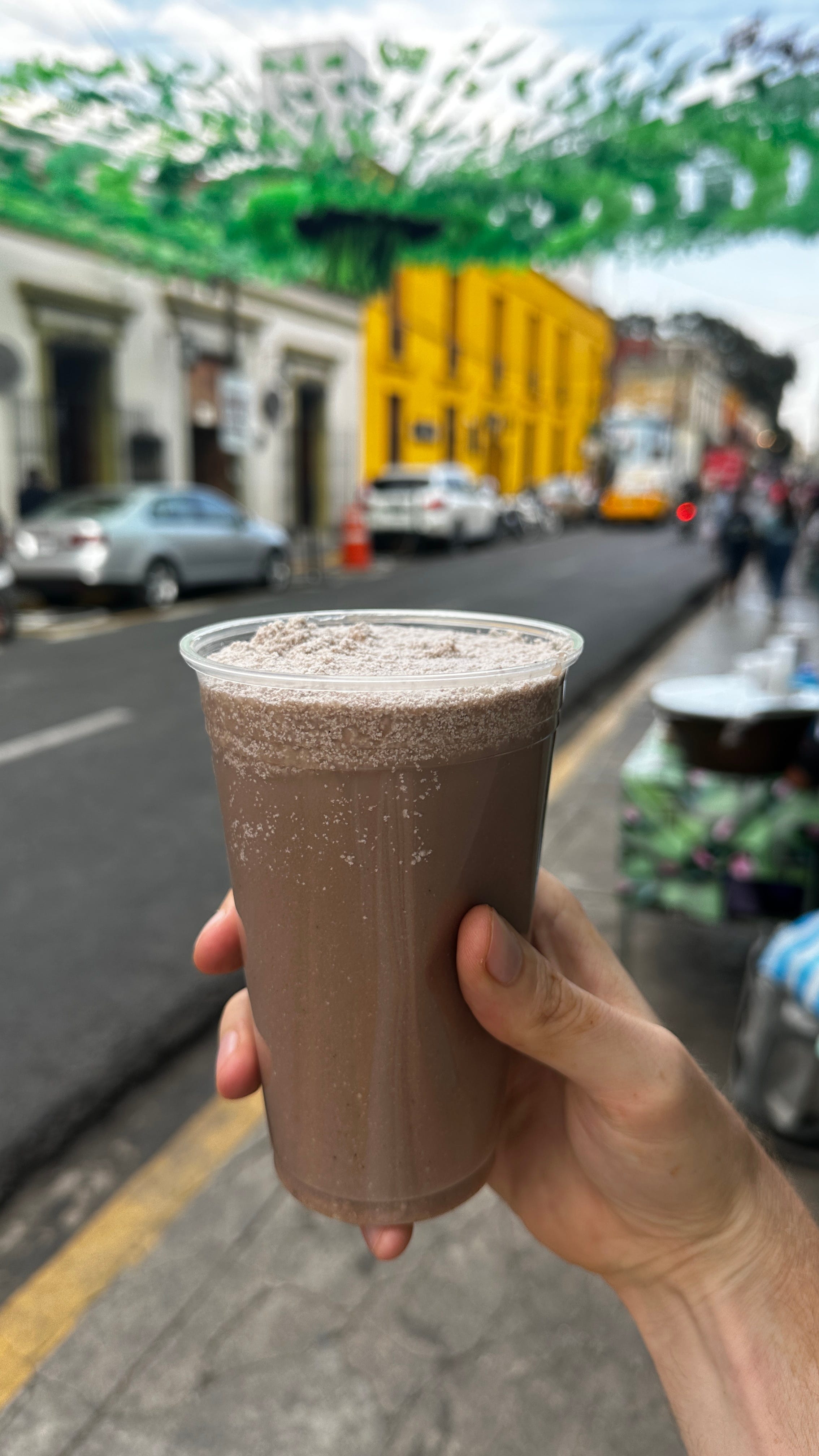
Tejate is a pre-hispanic chocolate drink that was often the first thing recommended for me to try in Oaxaca. Known as the drink of the gods, it is made from toasted corn, fermented cacao, mamey seeds, and rosita de cacao. If you walk around early enough in the day, you can see women hand-mixing the paste before adding water to turn it into the popular cold beverage. The signature white “foam” on top is actually fats from the cacao rising to the top during the preparation process, and was my favorite part of the drink
Mole
Mole is almost synonymous with Oaxaca. The city is known as “the land of the seven moles” thanks to a handful of distinct variations popularized there: negro, amarillo, verde, coloradito, rojo, chichilo, and manchamantel, in order of their prevalence from my experience. Of course, there are countless other varieties that are passed down through generations, but these are the ones most widely available around Oaxaca.
Mole negro is the most famous, and easiest to find, of all the moles, and is especially popular in tamales oaxaqueños. Amarillo is one of the most popular, with a milder flavor and wide availability in both empanadas and tamales. Verde is a fresher, herbal take on mole and, while less common on its own, is a common option in empanadas. Coloradito is sweet while rojo is spicy, and both can be found served with chicken and rice in market stalls and restaurants. Chichilo and manchamantel are not as easy to find as they tend to be reserved for special celebrations.


Tamales Oaxaqueños
Tamales are popular throughout Mexico, but the Oaxacan version is wrapped in oja de plátano (banana leaf) instead of a corn husk. The result is a more moist tamal with a slightly earthy flavor from the leaf. They are most commonly filled with mole negro, though the selection will vary depending on the vendor. I also found that there tended to be a wider variety of more traditional tamales available than in other Mexican cities I’ve been to, including sweet ones made of Oaxacan chocolate.
It’s also worth trying some atole with your tamal. The drink is a hot, corn masa-based drink almost always sold alongside tamales. Champurrado is the crowd-favorite chocolate version, but I suggest going for atole de panela, a uniquely-Oaxaca version sweetened with piloncillo and flavored with cinnamon.


Chocolate
Chocolate oaxaqueño is another world-famous product, but many are surprised that it’s not intended to be eaten straight. Instead, it’s ground into a thick paste and formed into tablets. These tablets are traditionally used to make a frothy hot chocolate drink, either de agua (water) or de leche (milk). Locals have strong opinions about which is better and more traditional, but I think it ultimately boils down to preference.
The chocolate is most often enjoyed with pan de yema, a fluffy bread named after the egg yolks that color the bread yellow. It is very lightly sweet, making it perfect to soak up the chocolate without overwhelming the palate. Other popular options include pan de cazuela, a clay pot-baked bread with a swirl of chocolate inside, and the Mexican-favorite concha.


Nieves
Nieve is essentially Mexican sorbet, made by hand in metal buckets. They are popular all around the country, but especially known in Oaxaca for a selection of unique flavors. Some of the most popular include leche quemada (burnt milk) and tuna (prickly pear), along with boozy mezcal flavors mixed with fresh fruit. Menus will typically be divided into de agua (water-based) and de leche (milk-based). Every vendor will have a unique selection, with some offering flavors inspired by popular snack cakes or even chapulines (grasshoppers).


Other
Tacos blandos are the typical form of Oaxacan tacos. They are characterized by thicker corn tortillas served rolled rather than folded. Of course, you can find more traditional tacos, but they typically represent the cuisines from other parts of Mexico.
Mangos en vinagre are a popular variation of fresh fruit on the streets of Oaxaca. Unripe green mangoes are pickled in a mixture of vinegar and spices and served straight, sometimes with additional chile added. Some vendors also serve similarly-pickled cebolla (onions) or ciruelas (plums).
Molotes are essentially fried pockets of masa, most commonly filled with chorizo and potatoes. They’re typically topped with col (cabbage), queso, and salsa. Though less common, you can also find a molotes de platano, made from mashed plantains instead of corn and accompanied by queso and crema.
Garnachas are small masa discs that are fried with a mixture of beef and onions then topped with a sort of cole slaw and crumbly cheese. They aren’t as prevalent as other items on this list, but are definitely worth trying if you happen upon them.
Nicuatole is a corn-based dessert that lies somewhere between a custard and a gelatin. It is very lightly sweet and easily recognizable by a pink layer on top.
Dulces regionales are Oaxacan baked goods. The range includes tiny cookies, mezcal-soaked sweet breads, and meringue-topped pastries.
Of course, this list doesn’t include everything you will find in Oaxaca. Some of the most common puestos are those selling hamburgers and hot dogs, elotes and esquites, or marquesitas. Those are all certainly worth trying if they strike your fancy but are not uniquely Oaxacan, so haven’t been included above.
Did I miss anything important? Let me know in the comments!
Want more like this? I post ongoing food finds and neighborhood eating tips on TikTok, and publish practical guides on Substack covering regional gastronomy. Subscribing helps support the work and ensures you don’t miss future guides.
Enjoyed this guide? Tips help support future food research and writing.
Suggested tips (totally optional):
$2 - Buy me a tamal
$5 - Buy me a tlayuda
$10 - Buy me mole & chocolate